Outdoor Decor
Clay vs. Plastic Pots for Outdoor Plants: Which Is Better?
You have found the perfect plant, picked the sunniest corner of the terrace, and now you are standing in the aisle holding two pots. One is warm, heavy terracotta. The other is light, inexpensive, and comes in a colour that almost matches the railing. Both have a drainage hole. Both will hold soil. The choice you make in the next two minutes will shape how often you water, how the plant looks by August, and how the corner survives its first February.
There is no single winner here. Clay and plastic behave so differently that the right answer depends on the plant, the exposure, and how willing you are to carry a watering can around in July. What follows is a comparison of the things that actually matter outdoors: moisture, weight, frost, roots and looks.
How Clay and Plastic Handle Water
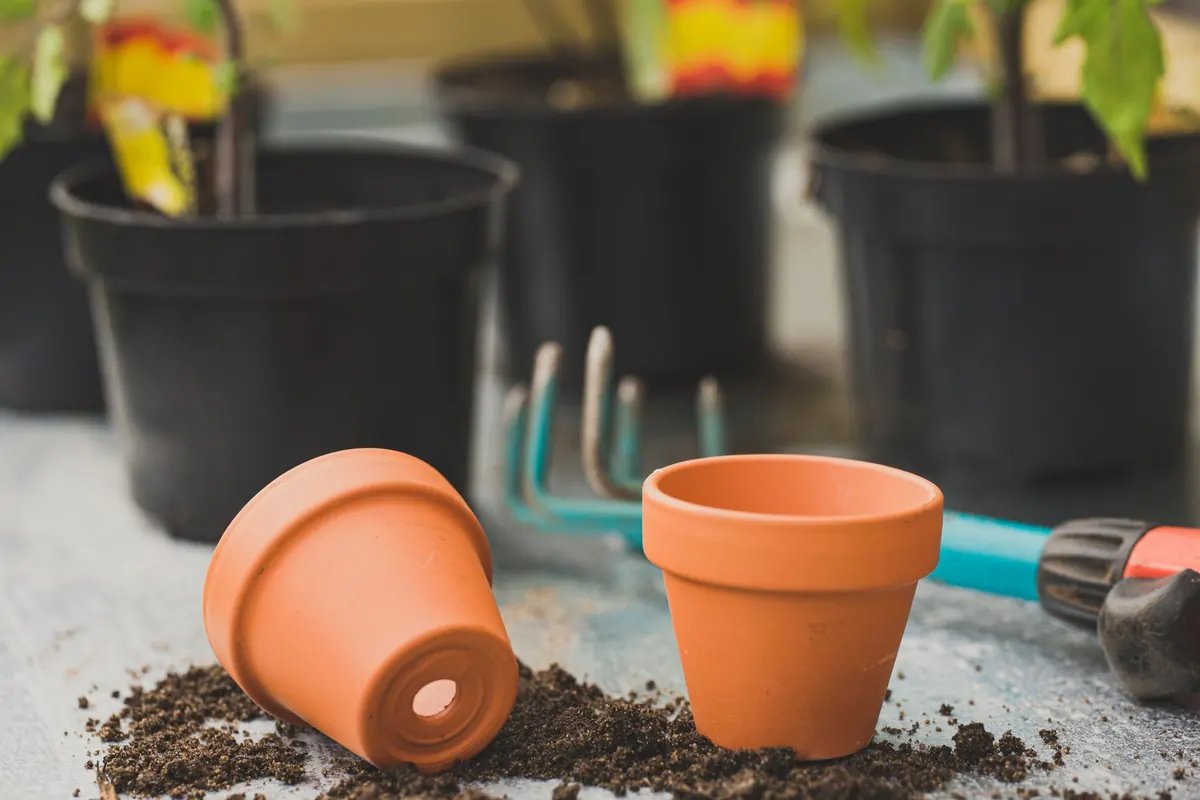
Unglazed terracotta is porous. Water moves through the walls and evaporates from the outer surface, which is why a clay pot shows a dark band after watering and a pale, chalky ring a day later. That evaporation is not a flaw; it is a slow, steady drying mechanism. Basil, lavender, rosemary, thyme, succulents and most Mediterranean plants are happier in clay than in anything else, because their roots get air between waterings. In a hot, breezy spot, a terracotta pot of mint may need water every single morning in midsummer.
Plastic is the opposite. A plastic pot is essentially a sealed bucket with a hole in the base, so the only way water leaves is through the drainage hole or up through the leaves. Soil stays damp much longer. For ferns, hydrangeas, hostas, and anything that sulks when it dries out, that is a genuine advantage. The risk is the reverse problem: a plastic pot that never dries out can leave the lower half of the root ball permanently soggy.
Three practical adjustments make each material work better:
- In plastic, use a chunky mix with bark and perlite, and empty the saucer an hour after watering rather than letting the pot stand in it.
- In clay, group pots together so they shade each other's walls, and consider a saucer only for plants that resent drying out completely.
- Check glazing. Glazed ceramic behaves like plastic, not like terracotta. If you want the look of clay with plastic-style moisture retention, a glazed pot in a terracotta colour is a good compromise.
Weight, Wind and Moving Plants Around
A large terracotta pot filled with damp soil is heavy. That is good news on an exposed balcony where a tall rosemary or a small olive tree catches the wind; a heavy base keeps the whole thing upright when a plastic pot would go over and scatter soil across the tiles. It is bad news if you like to chase the sun, move plants into the shade for a heatwave, or bring tender specimens indoors in October.
Plastic is light enough to lift with one hand, which makes it the practical choice for anyone who rearranges, overwinters plants in a garage, or gardens on a rented terrace where nothing should be permanent. The trade-off is stability. Wide, low plastic pots stay put far better than tall narrow ones, and a layer of gravel or a couple of bricks in the base helps on windy sites.
One tip that saves backs: place the pot exactly where it will live before you fill it. A half-filled pot can be shuffled; a full one cannot. Pot feet or a simple wooden riser also help, keeping the base off cold, wet paving and improving drainage.
Frost, Cracks and Winter Survival
Water expands when it freezes, and that is what kills pots. A saturated terracotta pot left out through a hard frost can crack cleanly down the side; the clay itself is not the problem so much as the water trapped inside its walls and in the compost. Frost-resistant or frost-proof glazed ceramics handle this better, and any pot sold for outdoor use in a cold climate should say so on the label. If it does not say, assume it is a fair-weather pot.
Plastic does not absorb water, so it does not split the same way, but it has its own winter weaknesses. Thin, cheap pots become brittle in the cold and crack if knocked, and plastic that has spent several summers in strong sun degrades and loses flexibility. Thick, UV-stabilised pots last far longer than the thin ones sold in stacks.
Whatever the material, a short winter routine prevents most damage:
- Make sure the drainage hole is clear and the pot sits on feet, not flat on wet stone.
- Tip out saucers so they cannot fill with rainwater and freeze around the base.
- Group pots against a wall or under eaves, where they get less direct rain and wind.
- Move tender plants under cover, and wrap the pot—not just the foliage—if a hard freeze is forecast.
Roots, Heat and Root-Zone Temperature
There is a quieter difference that shows up in high summer. A dark plastic pot in full sun absorbs heat, and the compost inside can get noticeably warmer than the air around it. Roots that evolved in cool soil do not enjoy that, and small pots are the most vulnerable because there is so little soil to buffer the temperature. Terracotta's evaporation cools the root zone slightly as it dries, which is part of why clay-grown plants often look steadier in a heatwave.
If you prefer plastic, choose light colours for sunny spots, or shade the pot itself with a neighbouring planter or a low plant. In very hot, dry climates, a light-coloured plastic pot in the largest size you can accommodate is often more forgiving than a small terracotta one that dries out by noon.
Style, Ageing and the Look of the Terrace
Terracotta is the material that improves with time. Algae softens the rim, minerals bloom across the surface, and the colour settles into something closer to stone. It sits comfortably with almost any planting style and reads as permanent—partly because it is.
Plastic tends to look best when it is new. Seams, uniform colour and a slightly shiny surface are hard to disguise, and cheaper pots fade or chalk within a few seasons. The good ones—matte finishes, muted colours, clean lines—look convincing at a distance and are far easier to scrub clean. If a terrace is small, repeating one material in three or four sizes creates more calm than mixing clay, plastic and glazed pots in equal measure.
When to Choose Each
Choose clay when
- The plant likes to dry out between waterings: lavender, rosemary, thyme, sedums, agaves.
- The pot will stay in one place and needs to hold its ground in wind.
- You want the container to be part of the design, not just a vessel.
Choose plastic when
- The plant drinks constantly: ferns, hydrangeas, mint, vegetables in summer.
- You need to move it—for overwintering, shade, or a rental balcony.
- You are potting up a lot of plants and want the budget to go on soil and specimens.
A Simple Way to Decide
Start with the plant, not the pot. If it hates wet roots, buy clay. If it hates drying out, buy plastic or glazed ceramic. Then check the site: windy and exposed favours weight, a hot south-facing wall favours light colours and generous soil volume, and a cold wet winter favours feet, drainage and honest labels. Finally, buy one pot in the material you are unsure about and live with it for a season. Watch how often you water, how the plant looks in August and how the pot looks in March, and you will know exactly what to buy next spring.
Photo: Ylanite Koppens / Pexels
Related Articles