Gardening Tips
Autumn Garden Cleanup Checklist for Healthier Spring Growth
Autumn cleanup is not a race to strip the garden bare. The best autumn work is selective: cut back what is diseased or collapsing, clear what blocks paths and drains, cover soil before winter rains, and leave enough standing and fallen material for the creatures that help the garden through the cold months. Think of it as setting the table for spring rather than closing the door on the season. You do not need a perfect weekend of weather or a long list of expensive supplies. A sharp pair of secateurs, a rake, a barrow of compost, and a few dry hours will get most gardens into good shape. The aim is a garden that is tidy where it needs to be, generous where it can be, and ready to grow again when the light returns.
Start with a slow walk and a short list
Before you cut anything, walk the garden with a notebook or your phone. Look for plants that flopped, foliage with spots or mildew, shrubs that need moving, and corners where water sits. This is also the moment to notice what still looks good: a clump of grasses catching the low light, a seed head, a late flower for bees. Those are clues about what to leave alone. A slow walk also shows you the jobs that are easy to miss from the kitchen window: a blocked drain behind the shed, a rose stem rubbing against a path, a pot that has cracked over summer.
Make a short list in order of urgency. It stops the job from becoming a vague, endless tidy-up and helps you use a dry afternoon well. Put the health of the garden first, then access, then appearance. If you only have an hour, spend it on diseased material and blocked drainage rather than on perfect edges.
- Remove diseased foliage first, especially from roses, peonies, and other plants that suffered black spot or mildew.
- Clear leaves and silt from paths, steps, drains, and gutters before the wet weather settles in.
- Cut back soggy annuals and collapsed perennials that are already turning to mush.
- Move tender pots under cover or against a sheltered wall.
- Note any gaps, broken supports, or plants that need dividing in spring.
- Check stored bulbs, dahlias, and other tender tubers for rot before you pack them away.
Cut back selectively, and know why
Not every perennial should be cut to the ground in autumn. Some plants look better left standing, and some are more useful to wildlife than they are to the compost heap. The question is not “What can I cut?” but “What will this plant do for the garden between now and spring?” If stems are black, soft, or mildewed, remove them. If seed heads feed birds and the stems are still firm, leave them. If the plant flops over a path and turns to slime, cut it back and put it on the compost, provided it is not diseased.
The cut-back list
- Cut back soggy annuals such as marigolds, cosmos, and nasturtiums once they have finished and collapsed.
- Remove diseased leaves and stems from roses, peonies, and other prone plants, and put them in the bin rather than the compost.
- Trim back perennials that have turned mushy, such as hostas and hardy geraniums, if they are blocking light or air.
- Tidy edges of paths and beds where stems are falling across access routes.
The leave-alone list
- Leave ornamental grasses standing for structure, movement, and winter shelter.
- Leave seed heads on teasels, echinacea, sunflowers, and verbena for birds and insects.
- Leave hollow stems of sturdy perennials where they are not in the way, as they make useful winter homes.
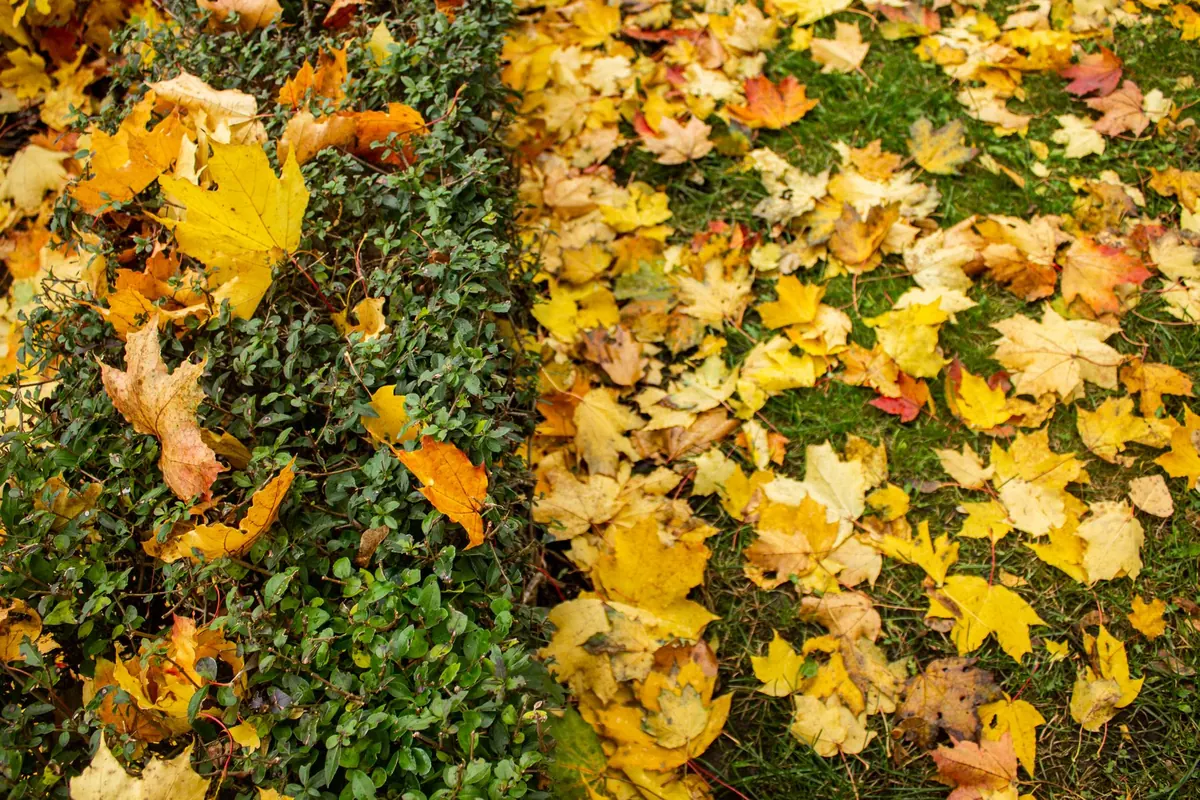
- Leave fallen leaves in borders and under shrubs, but clear them from paths, lawns, and drains.
Clear paths, drains, and storage before the rain
Autumn rain is patient. It finds the low corner of the patio, the gutter packed with leaves, and the path that turns green and slippery under a thin layer of algae. Clearing these now takes less time than fixing them in January. Sweep paths and steps, check drains and gullies, and clear gutters if you can do so safely. If you have a water butt, clean the inlet and check the overflow before the heaviest rain arrives. Store canes, stakes, and netting somewhere dry so they do not rot or become a tangle.
- Sweep leaves from paths and steps before they become slick.
- Clear drains, gullies, and gutter outlets so water can run away from the house and shed.
- Check downpipes and water butts for blockages and leaks.
- Clean and store garden furniture, canes, and supports under cover.
- Put a sheet or tarp over a compost heap if it is getting waterlogged.
Feed the soil, not the bin
Autumn is one of the best times to improve soil because the weather is usually mild and the garden is slowing down. Leaves, chopped stems, and spent compost can all go back into the system, but only if they are healthy and not full of weed seed or disease. Spread a layer of compost or well-rotted manure over empty beds and let the worms pull it down. On heavy clay, a mulch helps protect the surface from rain damage and reduces the paste-like crust that forms after winter. On sandy soil, it adds the organic matter that otherwise drains away.
Not everything belongs in the compost bin. Diseased leaves, perennial weeds with roots, and anything contaminated with oil or chemicals should be kept out. The rest can be chopped and mixed with dry leaves or cardboard so it breaks down rather than turning into a soggy mat.
Simple autumn soil jobs
- Mulch empty beds with compost, leaf mould, or well-rotted manure.
- Collect leaves for leaf mould; keep them separate from the main compost heap if you can.
- Chop thick stems before composting so they break down faster.
- Cover bare soil with mulch or a winter green manure to stop nutrients washing away.
- Empty and clean pots before storing them, and use the old compost as a mulch under shrubs if it is healthy.
Protect pots, tools, and tender plants
Pots are the first things to suffer in autumn. Terracotta can crack when water freezes in it, and small pots dry out and freeze more quickly than the open ground. Move tender plants under cover, raise pots onto feet so water drains away, and group them together for shelter. Wrap tender crowns with straw or fleece if frost is likely, but leave a little air so they do not rot. Clean and oil your tools before putting them away; a few minutes with a wire brush and an oily rag will save you from rusted blades in spring.
- Move tender plants into a greenhouse, porch, or sheltered corner.
- Raise pots onto feet or bricks to improve drainage.
- Wrap tender crowns and protect exposed roots with straw, fleece, or mulch.
- Clean, sharpen, and oil hand tools before storing them.
- Drain hosepipes and store them out of the cold.
A simple autumn weekend plan
If the list feels long, break it into a weekend with a clear order. Do the urgent jobs first, then the soil jobs, then the nice-to-do jobs. Stop when you are tired; autumn work is better done in short, careful sessions than in one rushed day. A garden does not need to be perfect before winter, only sensible.
- Saturday morning: walk the garden and remove diseased material.
- Saturday afternoon: clear paths, drains, and gutters, and move tender pots.
- Sunday morning: cut back collapsed growth and leave seed heads and grasses standing.
- Sunday afternoon: mulch empty beds, clean tools, and make a short note of jobs for spring.
Leave some wildness for wildlife
A garden that is too clean can be a hard place for wildlife in winter. Leave a few seed heads, a pile of stems, and a shallow dish of water. Do not cut every hedge or clear every leaf from the border. A little untidiness at the back of the garden is not neglect; it is habitat. The birds, beetles, and solitary bees that shelter there will be the same creatures that help pollinate and defend your plants in spring.
Autumn cleanup is not about making the garden look finished. It is about making it ready.
By the time the first hard frost arrives, the garden should be clear where it matters, protected where it is fragile, and still alive with places for creatures to hide. That balance is what gives spring growth a healthier start.
Photo: Natalia Sevruk / Pexels
Related Articles